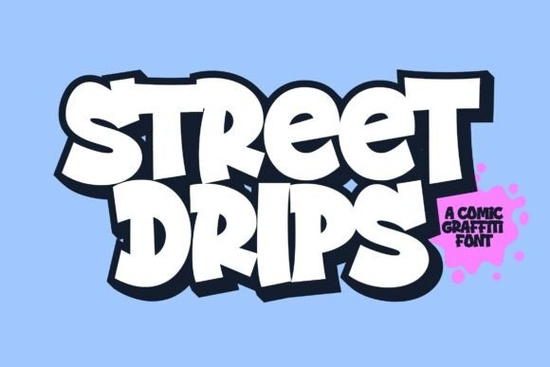
If you are looking for a bold, hand-drawn display typeface that adds instant personality to layouts, Street Drips Font delivers exactly that. Built around a graffiti cartoon style, it works well for branding assets, comic panels, promotional posters, and product packaging where you need letterforms that feel lively and slightly rough around the edges. Designers and small business owners often choose this kind of typography when they want to break away from stiff, corporate text and give their visual identity a street-smart edge.
What makes this graffiti typeface stand out for everyday projects?
Creators keep this typeface in their libraries because of the strong contrast between flat shapes and bold depth. The pack includes both a regular cut and an extruded variant, so you can pair them without hunting for matching three-dimensional add-ons. You also get complete alphabets, punctuation, and numerals for headlines and watermarks. When tested alongside a classic athletic display family, the organic drips give it a distinct hand-painted feel that stands out in crowded visual feeds.
How can you use the regular and extruded styles effectively?
Many crafters and print-on-demand sellers make the mistake of using dimensional typefaces as default body text. This style works best as a visual anchor. Start with the extruded version for main headlines or shirt graphics, then switch to the flat regular style for supporting details like taglines and pricing. Apply a light shadow or thin stroke behind the letters to help them pop against busy backgrounds. Pairing this playful display type with a clean, minimal sans serif gives clear visual hierarchy without competing with the decorative edges.
What should you check before sending files to print?
When working with any decorative display font, always expand your text or create outlines before handing files to commercial printers. Some output software struggles with complex curves if the type is not converted to paths first. Double-check your kerning, especially around uppercase letters that feature overlapping drips, as they can sometimes sit too close together at smaller sizes. For digital use like social templates or web banners, keep the type above 18 pixels to preserve those hand-drawn details. Designers looking to compare similar styles often check the main project listing to see how the letterforms render on different textures.
Which creative projects benefit most from this cartoon lettering?
Independent makers and hobbyist shops often use this kind of typography for products that need to feel approachable and energetic. Think skate brand merch, indie coffee shop signage, children's apparel, event flyers, or zine covers. Because the letterforms carry a natural bounce, they pair nicely with bright color palettes, halftone patterns, and illustration accents. Logo badges and packaging labels are another strong use case since the stylized shapes remain recognizable even when scaled down slightly. You can also layer the extruded cut behind a flat silhouette to create quick sticker mockups or patch designs without spending hours on manual vector effects.
If you are building a brand kit, test this typeface on both light and dark surfaces. Graffiti-style letters need a high-contrast background to keep inner cuts readable. Try adding a thin stroke around dark text on photos, or reverse colors for a stamped look on kraft paper. Keep character counts low in headlines, since display fonts become heavy with full paragraphs. Stick to short phrases and let negative space do the work.
Before launching your next design, run through this quick pre-flight checklist to make sure the typography holds up in real-world applications:
- Convert text to outlines before exporting final print files to avoid missing glyph issues.
- Check kerning manually around overlapping drips and tall capitals to prevent awkward spacing gaps.
- Limit headline length to three or four words for maximum impact and clean readability.
- Test on multiple backgrounds by placing white, black, and mid-tone layers behind the type to verify contrast.
- Keep a clean partner font ready for secondary text so the layout never feels visually overloaded.
Once your files pass these checks, you will have a consistent, production-ready layout that highlights the character of the lettering while keeping your overall message clear to buyers and readers.
Get Started Crafting with Pickled Lime Serif Typography
 Design with Stacked Varsity Lettering Styles
 Floral Frame Fonts for Beautiful Invitations and Cards
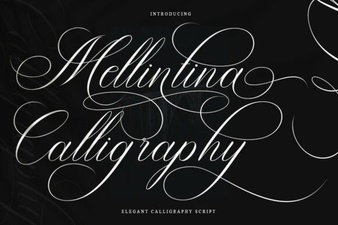 Melintina Calligraphy Font | Elegant Design Ideas & Uses
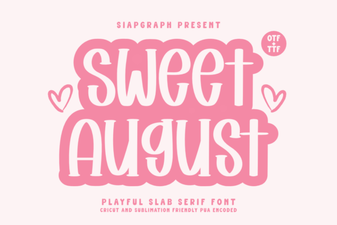 Sweet August Font: a Designer's Guide to Creative Typography
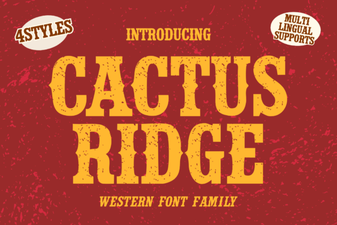 Cactus Ridge Font: Creative Design Ideas & Uses