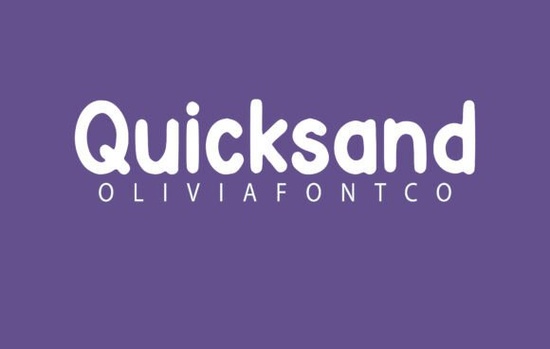
How does this handwritten style perform in actual layouts?
The main advantage of a typeface like this lies in its legibility across different formats. Unlike heavily distressed brushes or tight cursive scripts, Quicksand maintains clear character separation. You can set it as a full headline for a wedding invitation and drop it down to a smaller point size for digital menus without losing clarity. The romantic touch comes from gentle curves and natural baseline flow, which gives printed materials a warm, personal feel. Many creatives prefer it for lifestyle branding because it avoids looking overly ornate while still standing out from standard system fonts. Always test your layout at multiple screen resolutions before finalizing any digital banners. If you are testing it on different backgrounds, try pairing it with a light gray to let the strokes breathe. You can also explore how other script options handle weight and spacing to understand why certain letterforms work better on glossy paper versus digital screens.
Which creative projects actually need this level of polish?
Print-on-demand sellers and hobbyist makers often struggle to find a versatile script that adapts to multiple niches. This font works smoothly across several categories because the strokes are steady and predictable. You can use it for:
- Magazine headers and editorial spreads
- Wedding suites, place cards, and RSVP inserts
- Instagram templates, Pinterest graphics, and YouTube thumbnails
- Minimalist packaging labels and thank-you notes
When designing for POD products like tote bags or ceramic mugs, keep in mind that high-contrast scripts sometimes lose fine details during direct-to-garment printing. Quicksand uses thicker main stems and rounded terminals, which helps it survive the printing process while keeping that hand-drawn charm. Small business owners can scale the type safely for embroidery files or vinyl cutters, provided you maintain a minimum point size of 18 points for clean edge tracing. If you want to compare how similar scripts behave on textured mockups, reviewing another popular handwritten collection will give you a clearer idea of which stroke weights hold up under real-world constraints.
How do I pair this script with other typefaces and colors?
Handwritten styles rarely work well in isolation for long-form content. The best results come from pairing them with a clean sans serif or a classic serif for supporting text. Since this style already carries plenty of personality, choose a secondary font with straight geometry and open counters to create visual balance. Keep line height slightly larger than your usual setting, around 1.4 times the font size, so the letters do not crowd each other. Color choices matter just as much. Avoid placing light gray strokes on white backgrounds, as the romantic curves will fade into the canvas. Consistent baseline alignment ensures your headers never feel disconnected from the supporting copy. You can also check how different brush-style alternatives interact with geometric fonts before finalizing your layout. For official licensing details, you may want to visit the main Quicksand reference page.
Where should I look if I need more script variety?
Every project has slightly different spacing, mood, or cultural requirements. If your current draft feels too light for a bold packaging layout, you might want to step through a curated search to find heavier weights or structured cursive options. Browsing commercial-ready script alternatives can save hours of trial and error when you are working against tight client deadlines. You can type specific style keywords like modern calligraphy or vintage romance into the platform to filter by stroke thickness and language support. When exploring further, remember to compare dedicated script categories to find matching weights for consistent branding. Once you settle on your final pair, export your files as both OTF for desktop editing and TTF for broader system compatibility.
Before sending any files to print or uploading to your shop, run through this quick checklist:
- Open your design in both RGB and CMYK to verify color shifts do not flatten the script edges.
- Zoom to 100% on your primary monitor to spot overlapping anchors or inconsistent kerning.
- Test a print proof at actual size; handwritten strokes often look cleaner on paper than on backlit screens.
- Save a separate copy with text outlined or rasterized so your layout stays intact if files are missing during handoff.
- Double-check the license terms for sub-merchandising rules if you plan to sell physical goods featuring the design.
Start by placing your main headline in a draft layout, adjust the tracking slightly to tighten the flow, and compare it side-by-side with a neutral paragraph font. Once the visual rhythm feels natural, lock in your spacing and prepare your final exports.
Explore Design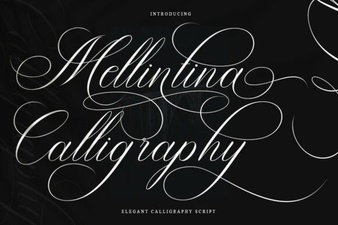 Melintina Calligraphy Font | Elegant Design Ideas & Uses
 Ankle Biter Font Projects & Download Instructions
 Fun & Creative Fonts for Your Writing Projects
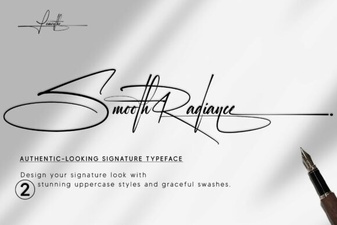 Smooth Radiance Font: Elegant Web & Print Design
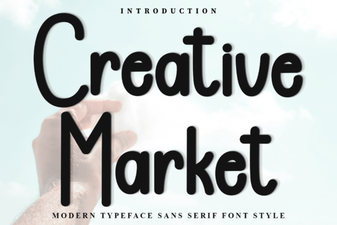 Browse Creative Fonts for Unique Design Projects
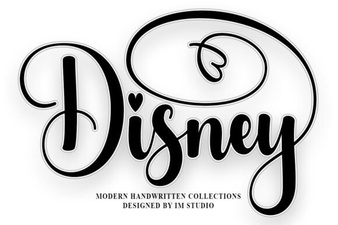 Designing with the Disney Font Magic